One of the densest woods in the Mediterranean
An olive tree grows for decades before it yields a single board. That slow growth is what gives the wood its weight, its tight grain and its resistance โ and everything on this page follows from it.
Why olive wood
Olive wood is not a decorative choice. It is one of the densest fruitwoods in the Mediterranean, and every property below comes from that density. Here is what it changes in a kitchen.
Dense enough to last decades
Olive wood is heavy, tight-grained and slow-grown. A board or a spoon carved from it takes daily use โ chopping, stirring, washing โ without splitting or losing its shape. Our pieces are cut from a single block, never glued or jointed, so there is no seam to come apart.
It holds no odour and no taste
The wood's natural oil content keeps liquids on the surface instead of letting them soak in. Garlic, onion and fish do not leave their smell behind, and nothing is passed on to the next dish. That same oil content is why olive wood copes with steam and damp far better than open-grained woods.
Gentle on your pans, kind to your hands
A wooden utensil will not scratch a non-stick coating or a cast-iron surface the way metal does. Olive wood also stays cool while you cook: you can leave a spoon resting in a simmering pot and pick it up without a cloth.
Naturally hygienic
Dense hardwoods draw moisture away from the surface, which leaves bacteria little to live on. Rinse, dry standing up, and the wood does the rest. We finish every piece with food-grade sunflower oil and nothing else โ no varnish, no lacquer, no sealant.
No two pieces are alike
The grain of an olive tree runs in curls and waves, shaped by decades of slow growth. Colours range from deep brown through gold to cream, sometimes within the same piece. That is why the board you receive will not be identical to the one in the photograph โ and why it darkens and deepens over the years.
Wood that costs no tree
Olive trees in the Mediterranean live for centuries and are pruned rather than felled, so they keep bearing fruit. The wood we use comes from those pruned branches and from trees that have reached the end of their productive life. Nothing is cut down to make a spoon.
One thing to know before you buy
Olive wood is hand washed, dried at once, and oiled from time to time. It does not go in the dishwasher. If that fits the way you cook, it will outlast almost everything else in your kitchen drawer. Our care instructions take two minutes to read.
What that means for you
-
Carved by hand
Each piece is cut from a single block, never glued or jointed. There is no seam that can come apart.
-
No two alike
The grain runs in curls and waves, from deep brown to cream. Your piece will not match the photograph exactly.
-
No tree felled
Only pruned branches and trees at the end of their productive life. Nothing is cut down to make a spoon.
-
Designed in Switzerland
Drawn and quality-checked from our studio near Lausanne, shaped by our artisans in Tunisia.
It asks for three minutes a month
Rinse, dry standing up, oil from time to time. No dishwasher. That is the whole method, and it is what makes a board last decades instead of years.
See it in the wood
-
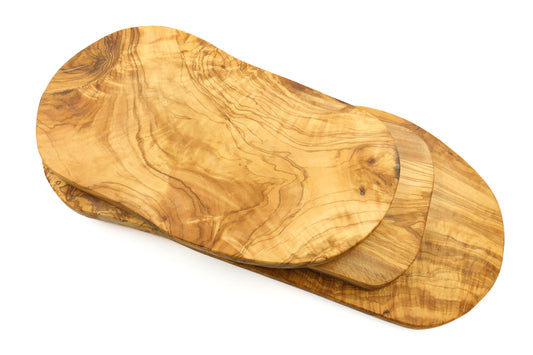
Irregular olive wood cutting board, organic and rustic shape
Regular price From $62.00Unit price / per -
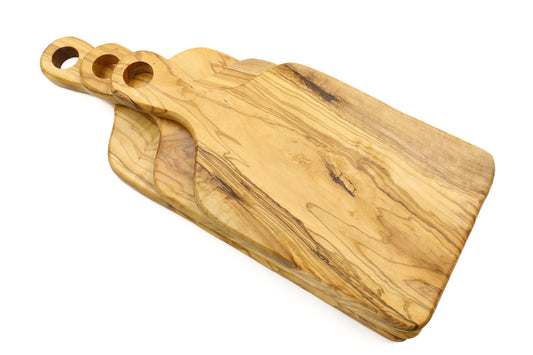
Olive wood chopping board, paddle form cutting board with handle
Regular price From $62.00Unit price / per -
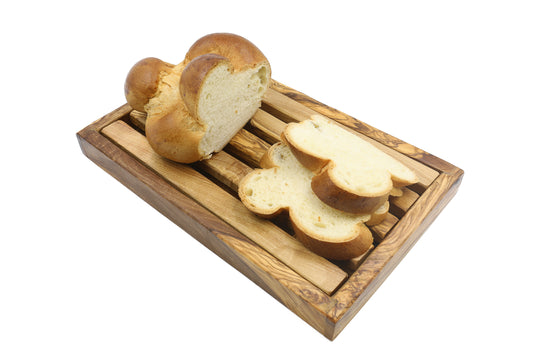
Olive wood rectangular bread cutting board with crumb catcher
Regular price $82.00Unit price / per -
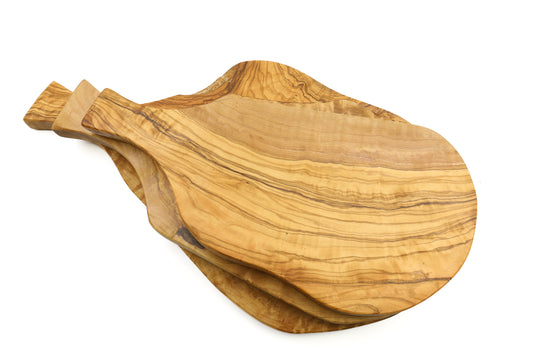
Irregular olive wood cutting board with handle, beef thigh shape
Regular price From $62.00Unit price / per