

Every Nawara Craft piece begins as an old olive tree that no longer bears fruit. Four steps take it from the grove to your table, and none of them can be rushed.
01
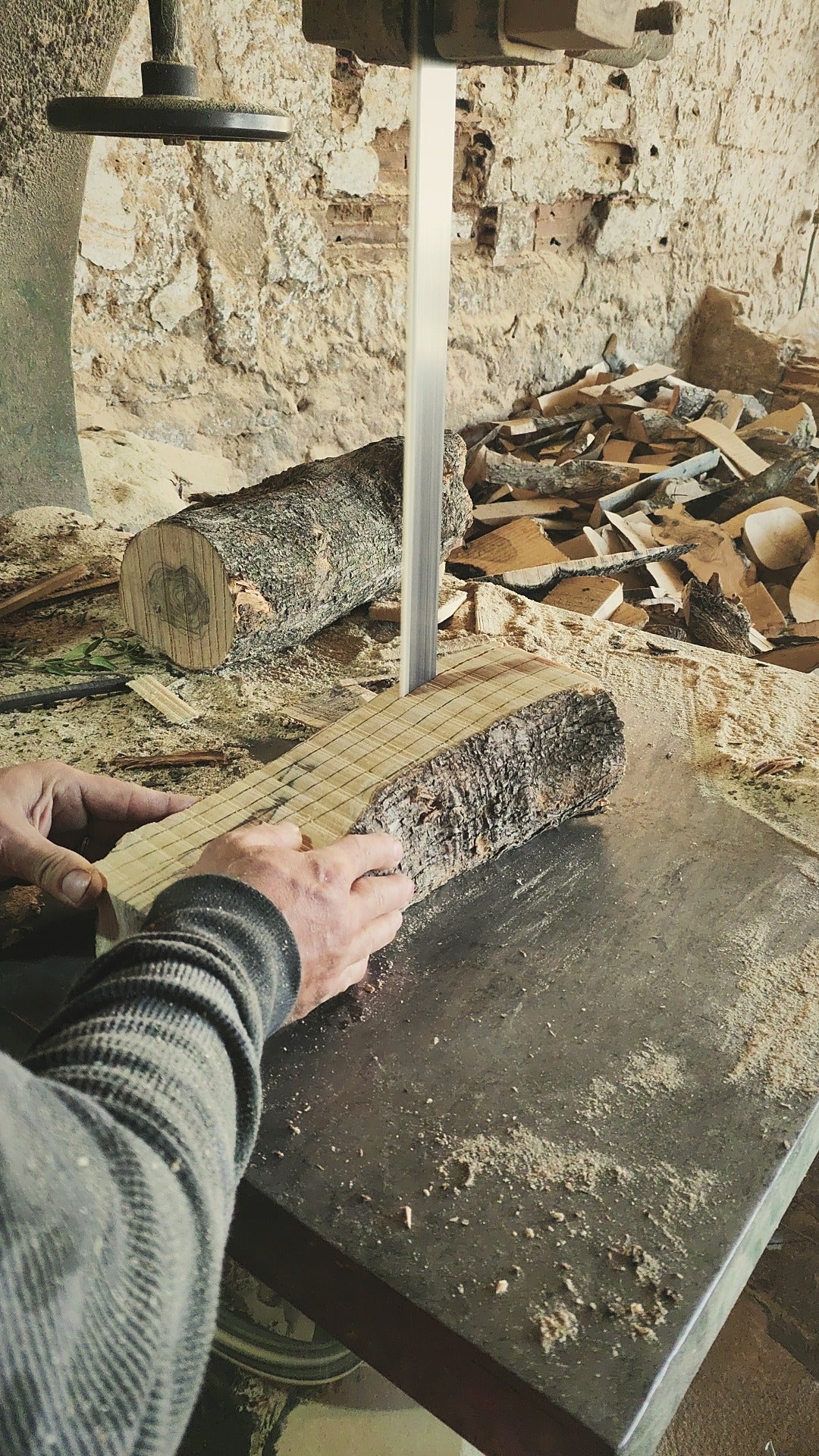
Old trees, never felled
An olive tree can live for centuries, but a day comes when it stops bearing fruit. Its wood is then usually burned as charcoal.
That is the wood we work with. Not one tree is cut down to make our boards, spoons or bowls: we give wood that was meant for the fire a second life.
02
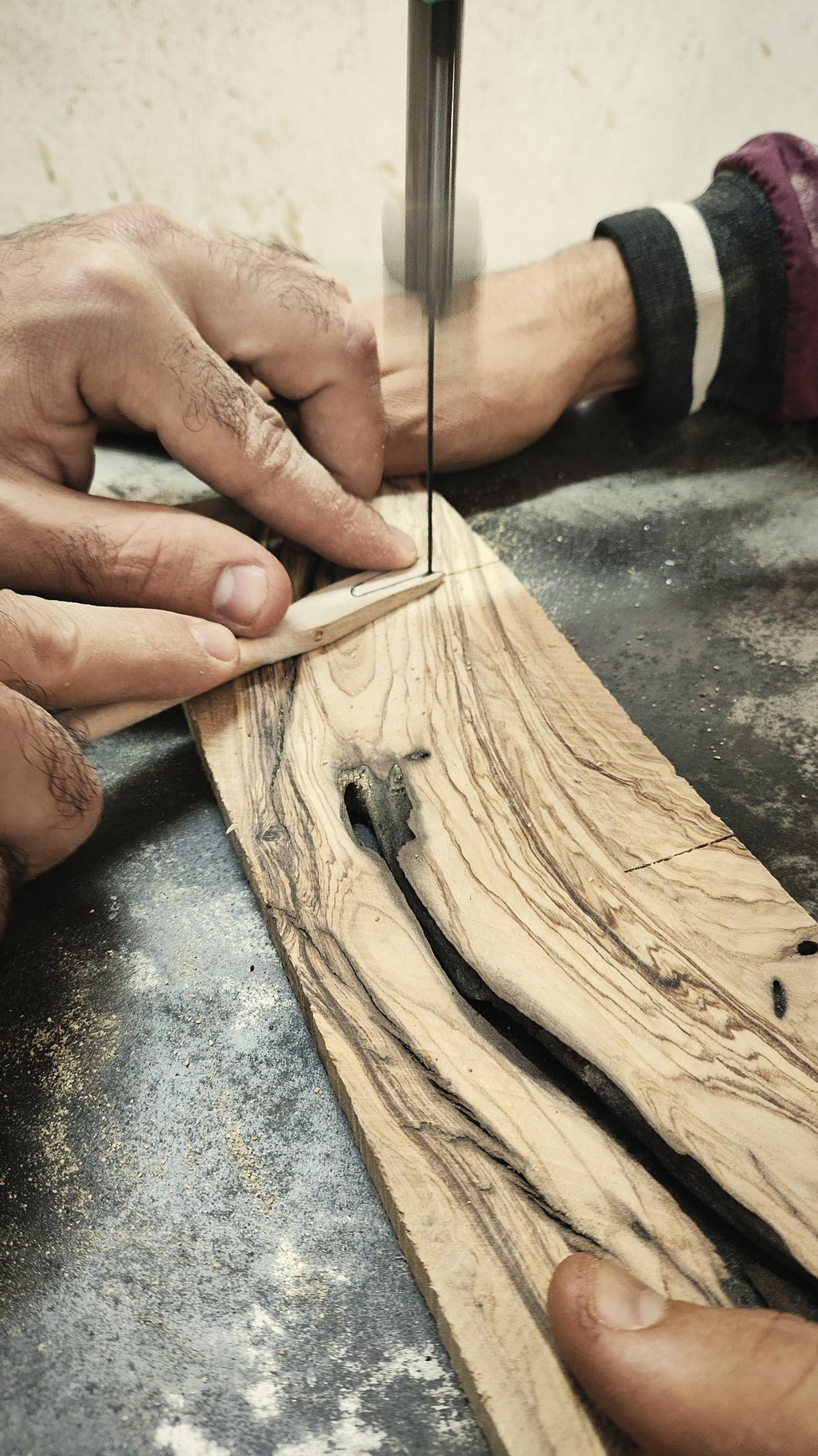
Carved by hand in Tunisia
Each design is drawn in Switzerland, then shaped by artisans in Tunisia who have worked olive wood for generations.
Every piece is cut from a single block: never glued, never jointed. The grain you see on the surface runs through the whole object.
03
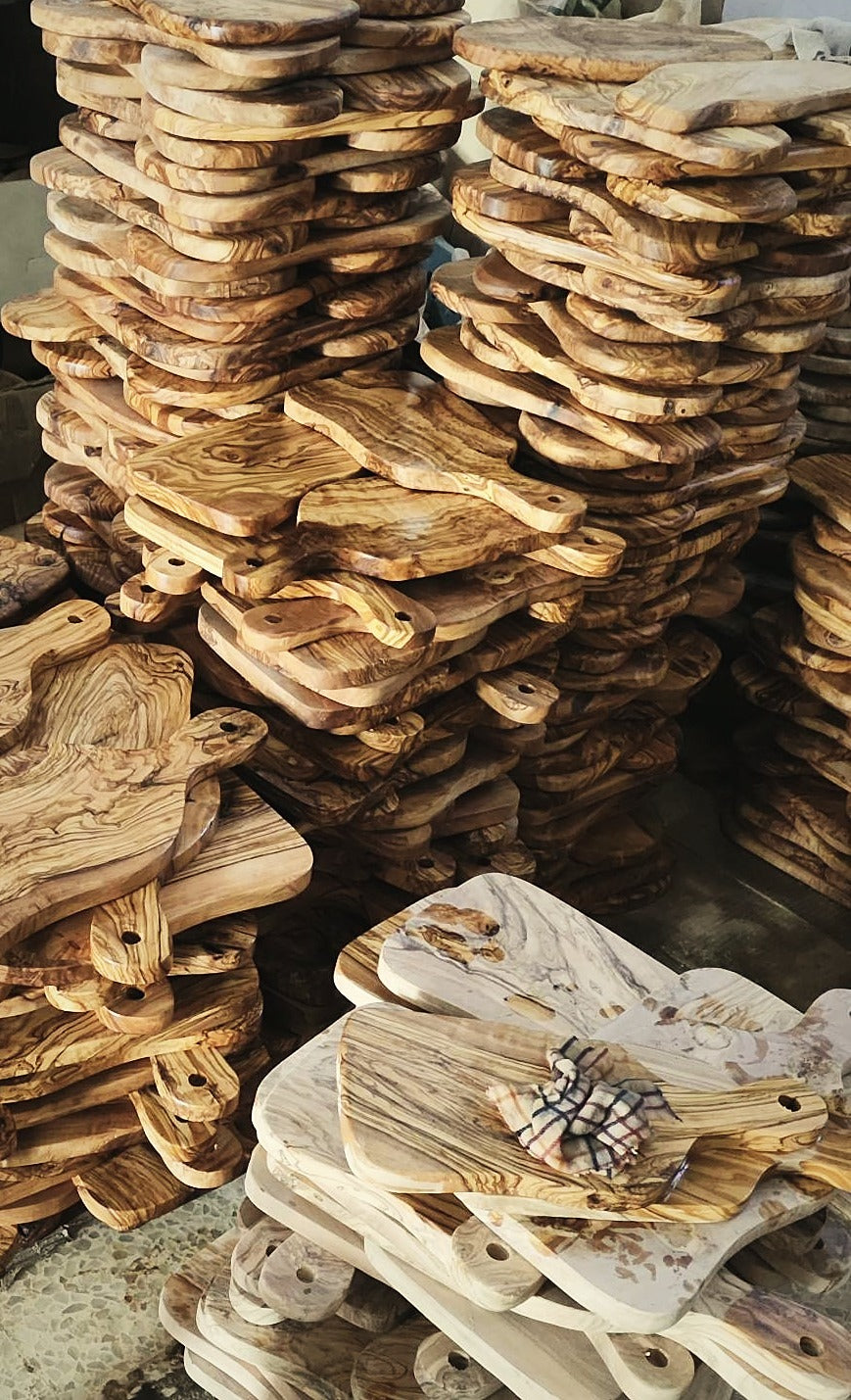
Dense, slow-grown, built to last
Olive wood is one of the hardest fruitwoods there is. It resists knife marks, holds no odours and, with a little oil now and then, lasts for decades.
Once sanded, each piece is finished with food-grade oil only: no varnish, no lacquer, nothing between the wood and your food.
04
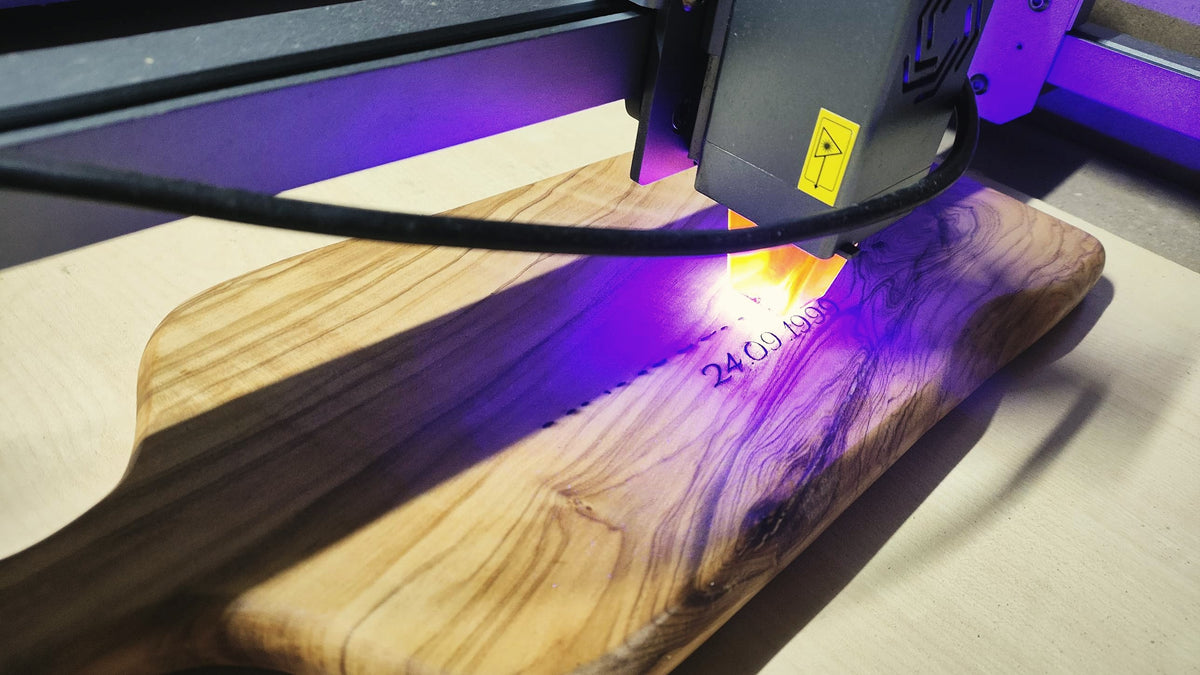
Engraved and shipped from Switzerland
In Switzerland, every piece is checked, laser-engraved free of charge when you ask for it, and packed with care.
A first name, a date or your logo is burnt into the wood itself. It will never wash off or fade.
No two pieces alike
Decades of slow growth twist the grain into curls and waves, from pale cream to deep chocolate. The piece you receive will be the only one of its kind.